

Hey hey long lost blog! Wait, the blog was here the whole time…I guess WE were MIA, not the blog? OK I’m not going to think about it too hard (mostly because my brain is already too tired from trying to figure out HOW TO BLOG…AGAIN).
Anywho…many vacations were taken and places were visited since the last time we blogged and clearly none of them made it here onto the VACATIONS AND PLACES blog. Fast forward to 2020. I don’t know about y’alls but this year has been kind of an ass-kicker for all kinds of reasons. As I type this we are in the middle of a worldwide pandemic (both of us have been working from home since March), a crazy-ass United States election (currently rigorously avoiding the NEWS at ALL costs), and large parts of our beloved home state of California are on fire (as is the west coast in general). So what are Two Passports to do when you can’t fly anywhere fabulous and you also JUST. CAN’T. TAKE. ANY. MORE. OF. BEING. HOME. RV Road Trippin’ here we come! It’s essentially taking your fully-sanitized-socially-distanced space and…well…moving it around the country. It’s a MF quarantine bubble. KABOOM.
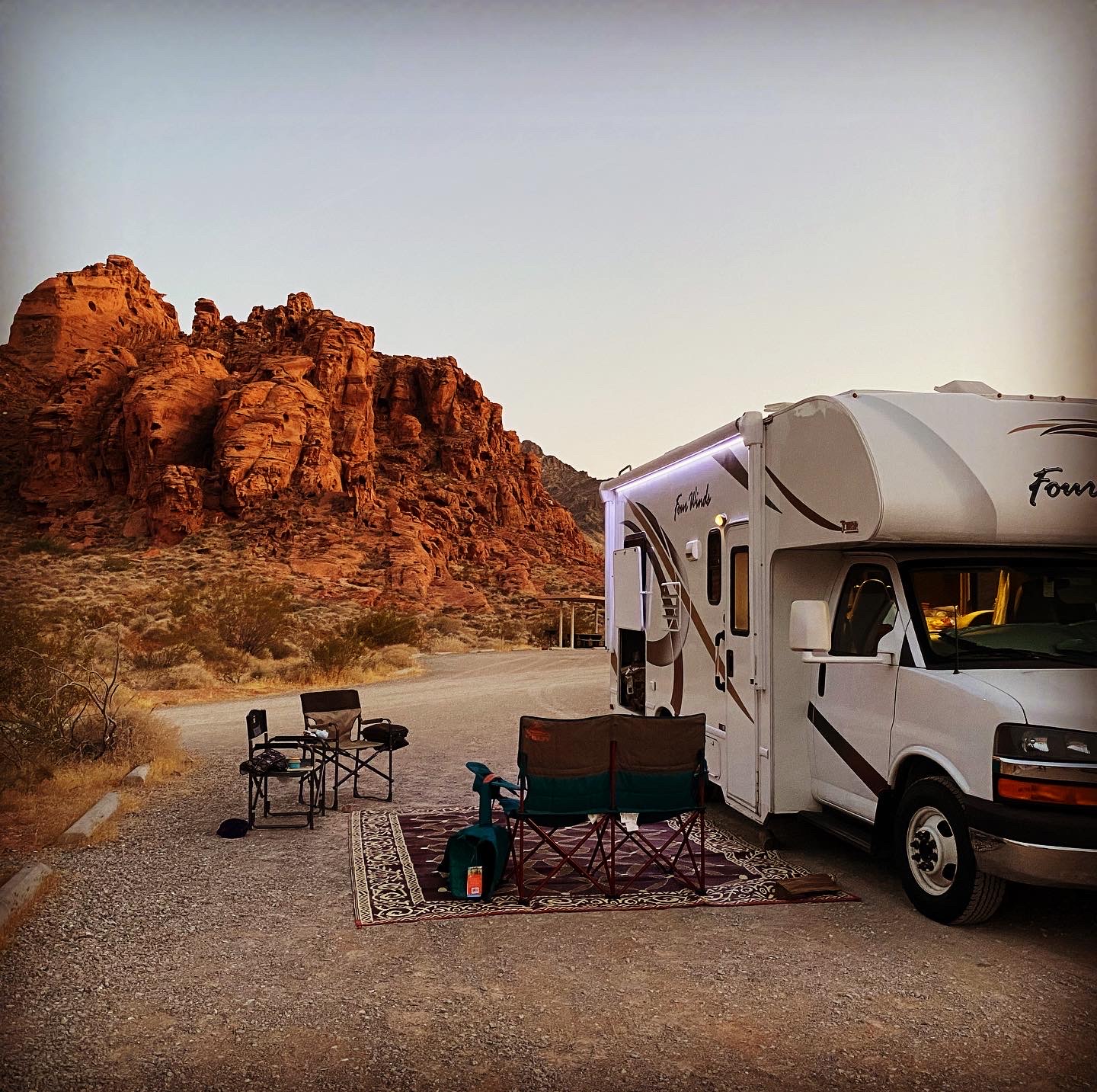
“But you don’t have an RV” you might say. That’s right we don’t. But we did rent one once to drive around Iceland several years ago so we’re familiar with the concept that a) they are rentable and b) you can survive renting one and live to tell about it. We learned a few things on that trip that we applied to this one. We’ve also learned a few lessons during the prep and planning of this trip.
With that, we give you the “Top 5 Tips to Faking Your RV Street Cred Even if You Aren’t RV People.”
- PLAN YOUR TRIP – research destinations and travel times carefully. You’ll want to have a good idea about how many miles you will be traveling (see #2) and now long it will take you to get everywhere. Add an extra hour or two to each travel day for gas stops, meal stops, grocery shopping, and visits to crazy roadside attractions (World’s Largest Rocking Chair? HELLS YEAH). We used Roadtrippers to determine routes, travel times, and potential stops and also Campendium to help us find campsites…both are available via website and as an app for your phone. Both sites offer reviews of destinations and campsites that can help guide your trip planning. Example: we drove an extra couple of hours one day so we could stay in a well-reviewed private RV campsite that offered free shuttles into the National Park we were visiting. That allowed us to park and connect to power and water for a couple of nights but still have the flexibility to access the parks various hikes and sights without unplugging and driving our 12,000 pound turtle shell around every day.
- SIZE MATTERS: make sure you pick the right size RV. They range from “cute and small” all the way up to “SUPER GINORMOUS.” If it’s just two of you and you plan to see lots of places, you’ll definitely want something smaller and more nimble and easier on the gas. If you are a family or a group of friends and you are going to be at the beach for a week – the more space the better…go BIG. Since there were only two of us and we wanted to visit several National Parks we chose a small-ish 24 foot RV…and as it turned out even that was probably too big. We would have been fine in a smaller sprinter van. We researched renting from a national rental company (like CruiseAmerica) and also renting from private individuals or small fleet rentals (similar to AirBnb but on wheels). We chose to go with the smaller/individual approach and used two sites to find our rig: Outdoorsy.com and RVShare.com. However you chose to rent, make sure you read the fine print on number of miles allowed per day, number of generator hours allowed, equipment allowed etc.
- PLAN YOUR TRIP: yeah it’s on there TWICE. We discovered that with RV trips it’s incredibly important to research and plan. RV rental agreements have limits on miles allowed per day and generator hours and additional rules about equipment like bike racks and awnings and tow hitches. For example, you’ll want to know if you are going to be in RV camps with hook-ups…if you are not in camps with hook-ups you’ll want to be aware of how many generator hours a day you have on your agreement because the generator is what you are going to run in order to charge ALL THE THINGS and have light and A/C and other fun stuff. You’ll also want to be sure that the places you want to go can accommodate your size RV – some places take only tents or aren’t level (important for an RV) or don’t have spots to accommodate larger RVs. Many prime locations need reservations WAAAAAY in advance (if campgrounds are booked, try a service like CampNab.com – you can pay to have it alert you when there are cancellations and a campsite opens up). Have a plan, use the plan to determine what kind and size of RV and equipment you’ll need. Once you’ve arranged your RV go back over the plan and look for areas where you you might need to make changes or have back-up options. We ended up using one of our back-up plans because Yellowstone experienced early season snow and cold temperatures and our RV did not have the equipment to ensure onboard plumbing etc would not freeze. So no Yellowstone for us.
- FOOD AND STUFF: Pack light on “stuff” and heavy on “food.” To be honest we only did HALF of this one right – so learn from our FAIL. Several days before we left we put all the “stuff” we thought we would need/want in in a prep area in our living room. We also made a detailed food list and did as much pre-prep of meals as we could (pre-cooked ribs, pre-cooked rice/pasta, pre-made shredded beef taco fixings, pre-made pasta sauce). I wish we had cut down on the “stuff” pile by as much as 75%. Go back to tip #3 and do your research research research. Example: we packed two wheelbarrows full of firewood only to discover that many of the parks were were in currently have campfire bans. We’ll be hauling back A LOT of unused firewood and we could have avoided that with more careful research. We also didn’t need half the clothes we brought (ok, this is mostly ME) or half the cooking utensils/pots/pans or all the books, camera equipment, electronics etc. If you are trying to bring all the comforts of home with you, maybe stay home. On the other hand, all our food prep time turned out to be a great investment as we’ve only had to stop once to refresh a few perishable groceries like ice and lettuce. Everything else was pre-made, frozen, and easy to re-heat and eat. Since the point of this RV trip was to be able to travel without being in crowds or with too many people, limiting the number of grocery stops was important – not to mention limiting the amount of time spent cooking in a tiny RV kitchen.
- DON’T DRIVE IT LIKE YOU STOLE IT: Take the time to make sure you understand HOW your RV WORKS and you know where the RV manual is. Our RV owners kindly walked us through all the onboard plumbing and electricity and then kindly drove with us on a test drive – trust me, driving an RV is not like driving your crossover SUV. Also, remember that YouTube and Google can SAVE you – we had a water pump problem in Salt Lake City that we fixed ourselves by watching a YouTube video. Just understand that you are driving around in a vehicle that has plumbing, an electrical system, air-conditioning etc. It’s not really that complicated but there are routines and steps that are important to keep everything working smoothly and you’ll want to be familiar with key areas like…dumping the water and sewage tanks.
That’s some idea of how we spent the few weeks leading up to launching our Western States National Park RV Road Trip. In the next blog we’ll share the itinerary wins and fails (because you know there was some of both).


 Two-Passports